Do You Really Need a Car? Compare Costs and Alternatives
10% off on product page · save $2.78
Do You Really Need a Car? Compare Costs and Alternatives

Start with the trips you actually make
Write down a typical month of travel. Include work, groceries, appointments, caregiving, social plans, and errands that come up unexpectedly. For each trip, note when you travel, how far you go, who comes with you, and what you carry. A grocery store that is walkable on a sunny afternoon may be much less accessible when you have heavy bags or need to bring a child.
Then separate essential trips from occasional conveniences. A commute with no dependable alternative deserves more weight than a trip you make twice a year. Consider safety, accessibility, weather, and the hours when service is available—not just the fastest travel time shown on a map. An alternative only helps if it works when you need it.
Compare the full cost
For car ownership, add a payment or depreciation, insurance, registration, parking, fuel or charging, maintenance, and a repair reserve. Owning a car outright removes the payment, not the other costs. For alternatives, price the combination you would actually use: transit, cycling, rideshares, car-sharing, rentals, or delivery. Include occasional expensive trips rather than assuming every month goes perfectly.
| Cost or need | Car ownership | Alternatives |
|---|---|---|
| Regular travel | Fuel or charging; parking | Transit fares; cycling costs |
| Fixed costs | Payment or depreciation; insurance; registration | Memberships, if any |
| Occasional trips | Tolls; extra parking | Rideshares; rentals or car-sharing |
| Unplanned costs | Maintenance and repair reserve | Last-minute rides or rentals |
Use local prices and your actual routes. The cheaper total is useful information, but it does not settle the decision if an essential trip remains difficult or unsafe.
Featured in this guide
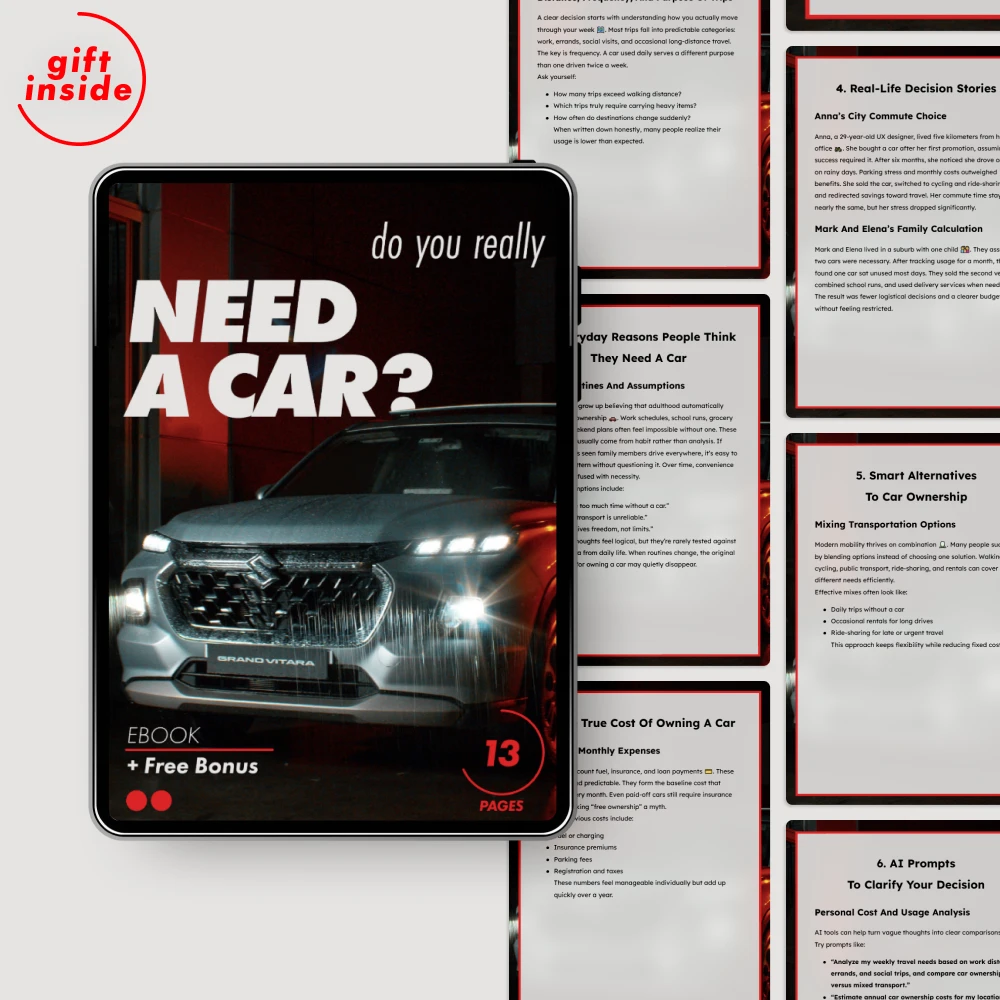
Do You Really Need a Car? | A Practical Ebook on how to know if you really need a car, Real Costs, Lifestyle Fit & Smart Transportation Alternatives
Test the lifestyle fit
Ownership may make more sense when you frequently visit spread-out destinations, travel outside transit hours, or regularly carry people or equipment. Going without a car may fit better when everyday destinations are close and you can reliably arrange a vehicle for the trips that need one.
Count time and effort as well as money. Parking and maintenance take time; so do transfers, waiting, and arranging a backup ride. If you have mobility needs or travel with children or dependents, test whether each alternative works for the whole trip—not just its main leg.
Run a low-risk trial
If practical, try your proposed transportation mix for two to four weeks before buying a car or giving one up. Track spending, door-to-door time, missed connections, and stressful moments. Include a difficult trip, such as a late appointment, a large grocery run, or travel in poor weather.
If you already lease a car, factor in the cost of changing that agreement before treating a car-free trial as a financial saving. Our Ending Your Car Lease Early? Avoid These Pitfalls checklist can help you organize the questions to address first.
Choose an arrangement you can revisit
Put your costs beside your trip notes. If alternatives save money but repeatedly fail an essential need, consider whether more dependable car access would solve it. If your trial works well and ownership costs substantially more, you may have room to choose a different arrangement.
Our Do You Really Need a Car? practical ebook offers a guided way to consider real costs, lifestyle fit, and transportation alternatives. Revisit your answer after a move, job change, new caregiving responsibility, or significant change in local service.
Check the product’s listed specifications when evaluating choose an arrangement you can revisit.
FAQ
What is meant by “you need”?
“You need” means something is necessary for a particular purpose. For transportation, define that purpose by the essential trips you must make.
Is YNAB really worth it?
YNAB may be worth its cost if its budgeting approach helps you consistently plan and track spending. You can make this car-ownership decision without it by recording your transportation costs in a spreadsheet or notebook.
Who sang the song “What You Need”?
Several songs have that title, including recordings by INXS and The Weeknd. The artist depends on which song you mean.
What is another word for “you need”?
Depending on the sentence, “you require” or “you must have” may work. “You could use” expresses a weaker need.
See if Do You Really Need a Car? | A Practical Ebook on how to know if you really need a car, Real Costs, Lifestyle Fit & Smart Transportation Alternatives fits your setup









Leave a comment