No-Gym Family Fitness: Simple Ideas for Busy Parents
50% off on product page · save $14.99
No-Gym Family Fitness: Simple Ideas for Busy Parents

Make Movement Fit Family Life
Getting everyone out the door can be a workout in itself. Between school, work, meals, and bedtime, adding travel to and from a gym may feel unrealistic. Some parents and children also find gym settings uncomfortable, especially when equipment or routines are unfamiliar.
At home, you can work around those barriers. A movement break might happen in the living room before dinner, outside while a sibling finishes homework, or wherever you have enough clear space. You don’t need to wait for an uninterrupted hour or expect everyone to move in the same way.
Start with a short, playful activity and see how it fits. Some days you may have time for more; on others, a few minutes together may be enough to keep the idea of movement familiar and enjoyable.
Check the product’s listed specifications when evaluating make movement fit family life.
Build a Simple Movement Break
Choose a time that already makes sense for your family, then clear away toys, furniture, and other obstacles. Invite everyone to move at a comfortable level, take breaks, or choose a different action.
These are ideas to try at home, rather than confirmed activities from the eBook:
- Warm up: Walk around the room at a comfortable pace.
- Play: Try a short dance break and let each person choose their movements.
- Take turns: Play follow the leader with gentle actions.
- Slow down: Finish with easy walking or stretches, skipping anything that hurts.
You can change the order, repeat a favorite game, or stop after one activity. If music makes a dance break more appealing, let each person suggest a song. Keep the volume comfortable, particularly if anyone is listening through headphones. Our Headphone Ouch-Proof Your Ears guide is another resource for readers interested in headphone comfort.
Check the product’s listed specifications when evaluating build a simple movement break.
Featured in this guide
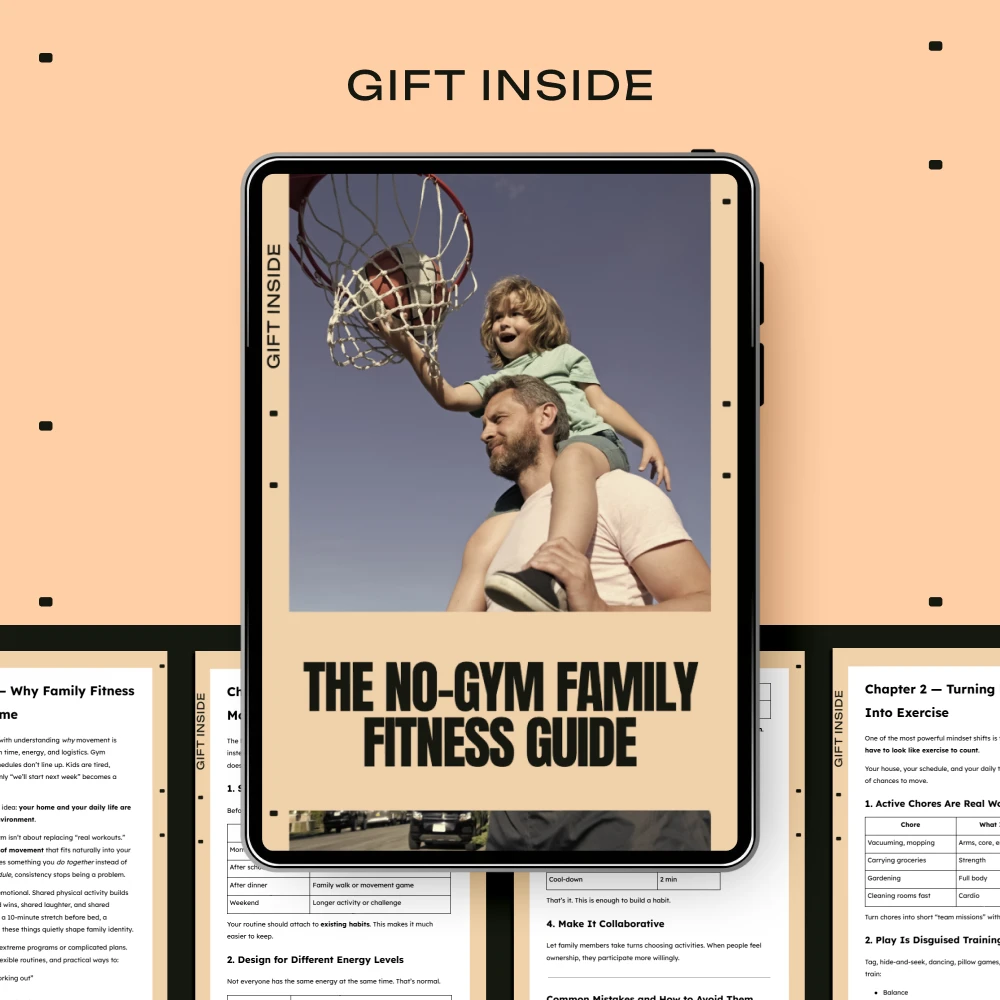
The No-Gym Family Fitness Guide | Family Fitness Without Gym eBook for Busy Parents, At-Home Movement Routines, Fun Games & Sustainable Habits
Make the Habit Flexible
Offer children a choice between simple activities and rotate who gets to lead. A familiar cue, such as after school or before dinner, can help you remember to make time for movement.
If the day changes, try another time or start again tomorrow. Focus on enjoyment rather than competition: one person can move slowly while another chooses a livelier pace.
Check the product’s listed specifications when evaluating make the habit flexible.
Is the eBook Right for You?
Our No-Gym Family Fitness Guide is an eBook for busy parents interested in at-home movement routines, fun games, and sustainable habits. It may be a useful starting point if you want to explore family activity without relying on a gym.
Think about when your household has a little room to move and how you can adapt activities for different ages and abilities. You don’t need everyone to follow the same routine.
Keep Movement Comfortable and Age-Appropriate
Have an adult supervise children, clear the play area, and choose actions suited to each person’s age and ability. Begin gently and increase time or activity gradually as your family becomes comfortable.
Stop if an activity causes pain. If someone has an injury, a health concern, or questions about suitable activities, seek guidance from a healthcare professional.
Check the product’s listed specifications when evaluating keep movement comfortable and age-appropriate.
Before choosing, compare the product details with your daily routine, available space, care needs, and preferred setup. The strongest option is usually the one that fits the intended use clearly and remains simple to clean, store, and check before repeat use.
FAQ
Does DOMS ever go away?
Delayed-onset muscle soreness, or DOMS, usually resolves within a few days. Seek medical advice if soreness is severe, persistent, or accompanied by concerning symptoms.
Is Heather Robertson or Caroline Girvan better?
Neither is universally better; the right choice depends on your preferences, experience, and the demands of a particular workout. Choose sessions you can adapt comfortably, and stop if a movement causes pain.
Is it true that 75% of Americans don’t exercise?
That figure depends on how exercise is defined, which population is measured, and when the data was collected. It should not be treated as a general fact without a specific, current source.
See if The No-Gym Family Fitness Guide | Family Fitness Without Gym eBook for Busy Parents, At-Home Movement Routines, Fun Games & Sustainable Habits fits your setup






Leave a comment